Articles & Publications
NAEP Device-Agnostic Research: Designing an Assessment Experience that Works Anywhere
 |
When the National Assessment of Educational Progress (NAEP) explored allowing students to take assessments at home during COVID, the design team faced a critical question: How can we create a device-agnostic experience that works equally well on phones, tablets, and computers? |
|
My Role As the Lead UX Strategy & Research, I conducted a short mixed-method study to understand the range of devices students actually use, how many they have access to, and how socioeconomic factors influence their technology use. |
 |
 |
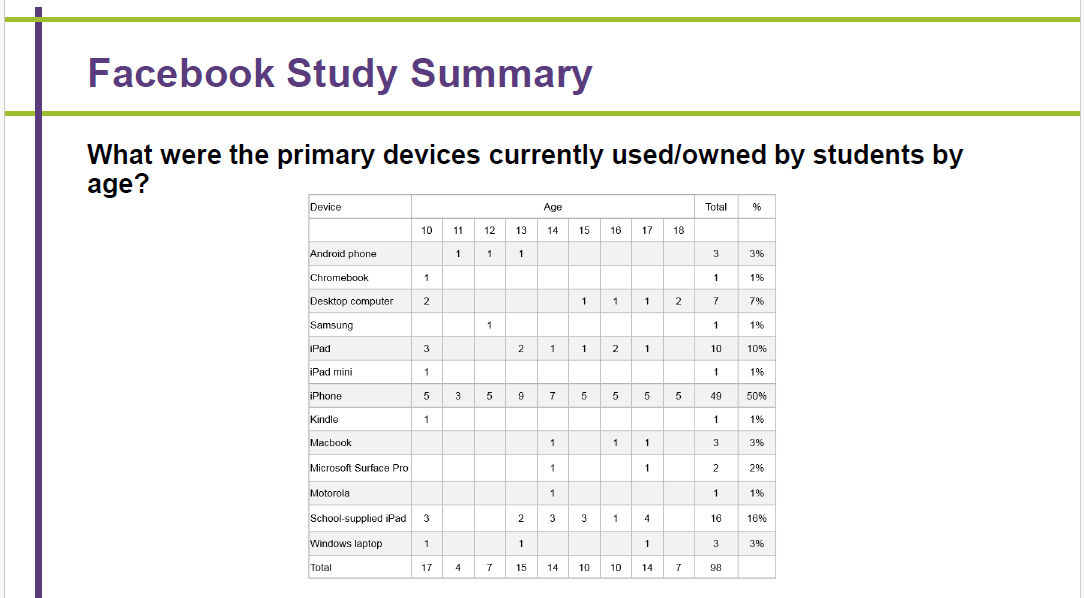
Study Approach To gather quick, relevant data, I recruited participants through local Facebook groups in Hilliard, Ohio. Parents provided information about their children’s ages and primary devices. In total, 63 students (ages 10–18) reported 98 total devices. |
|
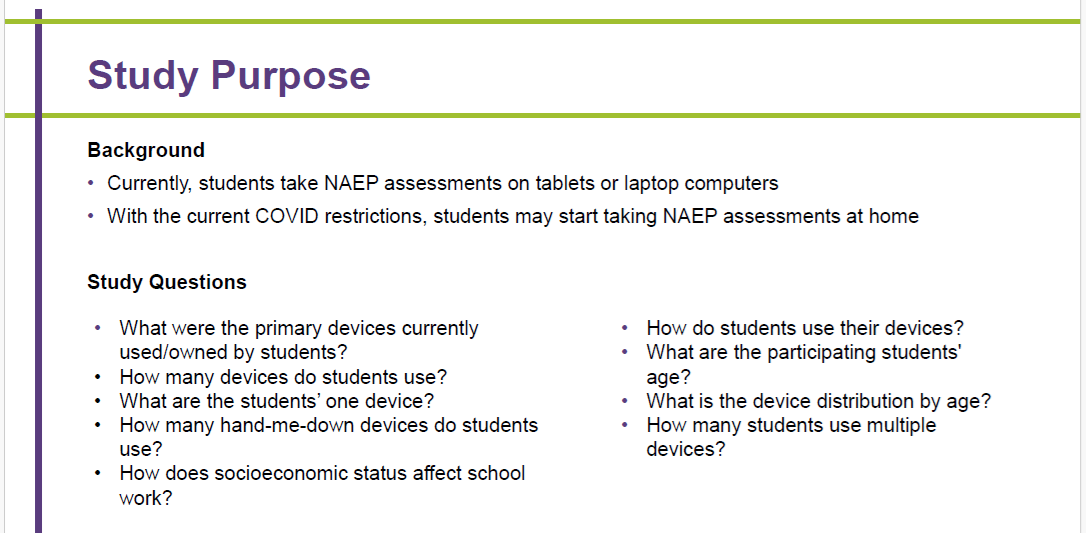
The study explored:
|
|
Key Findings
- iPhones dominated — 50% of all devices, and 71% of “one-device” users relied on them.
- Over half (55%) of students had only one device.
- 12% used a hand-me-down device, most often iPhones or MacBooks.
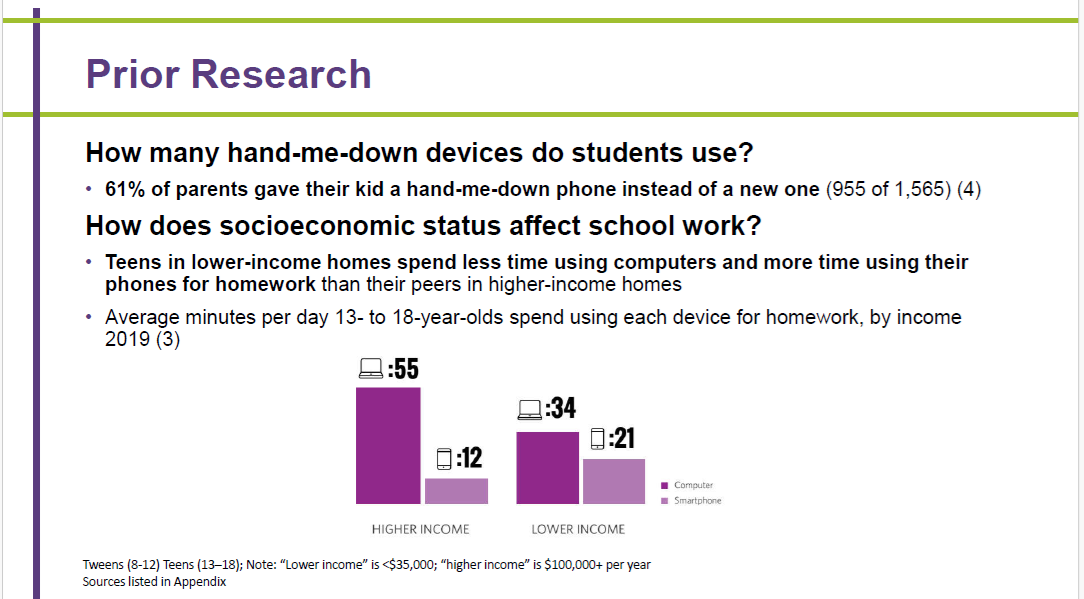
- Lower-income students were more likely to rely on phones rather than laptops for schoolwork.
 |
Design Implications These findings directly shaped NAEP’s prototype direction. We prioritized:
|
By grounding design in real-world device data, the team could ensure NAEP’s assessment tools were not only accessible but truly device-agnostic — giving every student an equal opportunity to succeed, no matter what technology they have at home.